THANKS FOR PLAYING!

If you want to learn more, scroll to read the information below about specific tactics you can use to outsmart misinformation.

USE THE S.I.F.T. METHOD

The S.I.F.T. method for evaluating information avoids the mental overload that can result from attempting to evaluate information/sources. Instead of using a checklist, you are encouraged to take action.

Stop

Investigate the source

Find better coverage

Trace claims, quotes, and media to their original context

IDENTIFYING RED FLAGS

Knowing what to look for when investigating a source can be tricky. Here are some guidlines to help.
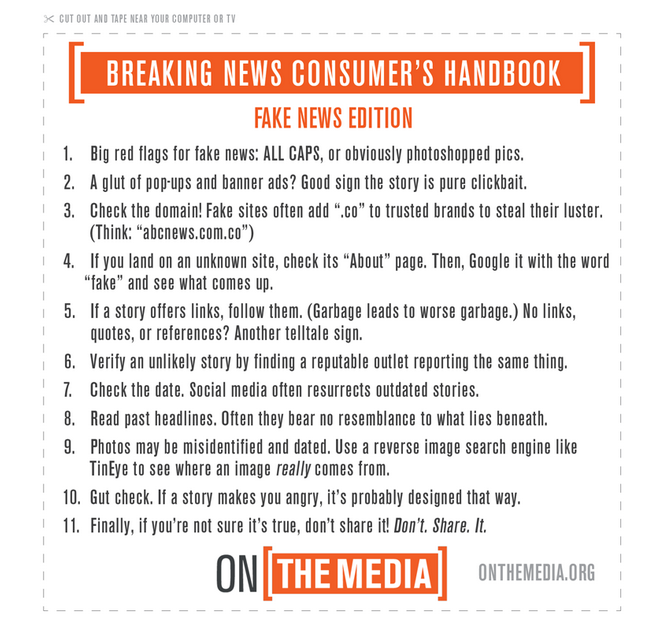

IMPORTANT TERMINOLOGY

Knowing these terms will help you better identify misinformation and provide justification to those who need it.

Confirmation Bias
The tendency to interpret new evidence as confirmation of one's existing beliefs or theories
Filter Bubble
A situation in which an Internet user encounters only information and opinions that conform to and reinforce their own beliefs, caused by algorithms that personalize an individual's online experience.
Post-truth
Relating to or denoting circumstances in which objective facts are less influential in shaping public opinion than appeals to emotion and personal belief.
Propaganda
Information, especially of a biased or misleading nature, used to promote or publicize a particular political cause or point.
Satire
The use of humor, irony, exaggeration, or ridicule to expose and criticize people's stupidity or vices, particularly in the context of contemporary politics and other topical issues.
Spin
Give (a news story or other information) a particular interpretation, especially a favorable one.
Truthiness
The quality of preferring concepts or facts one wishes to be true, rather than concepts or facts known to be true.